
With the implementation of the four Labour Codes, all employment contracts and engagement agreements must now be realigned as follows: Mandatory Formalization Appointment letters mandatory for all employees, safety measures. in prescribed format. Must clearly capture designation, wages and benefits 2. Standardised Wage Structure Uniform definition of “Wages” applies. 50% Rule: Allowances cannot exceed 50%…

Cryptocurrency as Property: Business & Legal Implications of the Madras High Court Ruling
- 2025-11-28
Introduction The legal status of cryptocurrencies in India has long existed within a zone of ambiguity, creating uncertainty for enterprises, custodians, exchanges, and investors seeking clarity on the classification, ownership, and enforceability of rights with respect to cryptocurrencies. This uncertainty has now been fundamentally changed by the landmark ruling of the Madras High Court in…
Introduction The implementation of the Digital Personal Data Protection (hereinafter referred to as “DPDP”) Act, 2023, will be significantly transforming the landscape of data governance for Indian organizations, with a particular focus on safeguarding personal data in compliance with global standards. For procurement and legal teams, vendor due diligence has emerged as a strategic priority,…
National Building Construction Corporation v. Sharma Enterprises Court – Delhi High Court Citation – O.M.P. (COMM) 215/2022 Date – 19.11.2025 The Hon’ble Delhi High Court has held that the Arbitral Tribunal is the master of facts and evidence and the Court in appeal cannot re-appreciate factual or evidenciary findings recorded in an arbitral award. The…
INTRODUCTION The Digital Personal Data Protection (hereinafter referred to as “DPDP”) Act, 2023, marks a transformative shift in how Indian banks manage personal data, particularly within the context of correspondent banking, where cross-border data flows are an operational necessity. Correspondent banking where banks facilitate financial services for other banks, often in different jurisdictions relies heavily…
The High Court of Karnataka at Bengaluru, in the case of Emmanuel Constructions Pvt. Ltd. v. Principal Secretary to the Government, Finance Department, Writ Petition No. 5827 of 2025, decided on 23.10.2025, held that a composite show cause notice covering multiple assessment periods and separate adjudication orders passed by different officers on the basis of…
INTRODUCTION India has taken an important step in reshaping its labour law system by bringing four new labour codes into force. These include the Code on Wages 2019, the Industrial Relations Code 2020, the Code on Social Security 2020 and the Occupational Safety, Health and Working Conditions Code 2020. This reform matters because earlier labour…
When I look back at the last three decades of regulatory transitions in India from excise to GST implementation, from IT Act amendments to sectoral cybersecurity standards, then one lesson has remained unchanged: Those who wait for the deadline always lose the advantage. Not legally, but operationally. The DPDPA is no different. On paper, the…
INTRODUCTION On a contemporary scale, India’s financial ecosystem has greatly evolved, accompanied by swift technological upgrades. One of the most important innovations influencing mass market participation is the Unified Payments Interface (hereinafter referred to as “UPI“). If in the distant past, digital payment was often restricted to the primary account holder, nowadays, UPI has gone…
The Digital Personal Data Protection Act, 2023, and its accompanying Rules have fundamentally altered the compliance landscape for India’s healthcare sector. For hospitals, diagnostic centers, and telemedicine platforms processing patient data, the stakes have never been higher. With penalties reaching up to ₹250 crore for serious contraventions and regulatory enforcement now operational, the time for…
INTRODUCTION The price, output, and quality are three primary parameters that competition law has traditionally focused on. The advent of zero price digital services, however, has changed this classical framework. Consumers in the digital economy do not use money to obtain anything, but rather their personal data, which serves as the business model for online…
DPDP Rules Notified – Immediate Actions
- 2025-11-19
The Digital Personal Data Protection Rules, 2025 were notified in the Gazette on 13 November 2025 (G.S.R. 846(E)). Some provisions are already in force, while the core compliance obligations kick in over the next 12–18 months: Rules 1, 2 and 17–21 apply from publication; Rule 4 (Consent Managers’ registration) starts one year after publication; Rules…
The Hon’ble Supreme Court, in the case of General Manager, U.P. Cooperative Bank Limited. vs. Achchey Lal & Anr., Civil Appeal Numbers 2974 of 2016, decided on 11.09.2025, clarified the legal principles governing the determination of an employer-employee relationship where workers are engaged through an intermediary, in this case, a registered employees’ cooperative society running…
INTRODUCTION The Goods and Services Tax (hereinafter referred to as “GST”) cancellation of registration has been noted to be one of the most contested matters in the GST regime. Businesses often dispute cancellation orders on the basis of flawed Show Cause Notices (hereinafter referred to as “SCN”), absence of factual specifics, mechanical argument and breach…
Defamation Risks in Termination Letters: Balancing Contractual Rights and Employee Reputation
- 2025-11-17
The Delhi High Court, in the case of Abhijit Mishra v. Wipro Limited, Civil Suit (OS) Number 31 of 2021, decided on 14.07.2025, addressed the extent to which employers can exercise their contractual termination rights without violating an employee’s right to reputation. The Court held that while the Defendant was entitled to terminate the employment…
13 November 2025 will be remembered as the day India crossed into a new digital era, a Privacy Singularity. For the first time, the rights of the Indian citizen are codified, actionable, and backed by statutory duties on every Data Fiduciary and Processor. This is bigger than compliance. It is a redistribution of digital power….
Introduction FinTech apps make money movement feel effortless, but the moment you sign up they start collecting a lot of personal and financial details. This can include your phone number, bank information, ID proofs, transaction history and even how you use your device. All of this sits behind the smooth buttons and screens you tap…
The High Court of Orissa in the case of Aruni Stone Crusher v. Superintendent, Central GST and Central Excise (2025) 35 Centax 284 (Ori.), decided on 25.09.2025, examined whether a rectification application filed under Section 161 of the Goods and Services Tax (hereinafter referred to as “GST”) Act, 2017 must be considered before continuing with…
The Apprenticeship (Amendment) Rules, 2025 – Strengthening Compliance, Equity, and Employability
- 2025-11-10
INTRODUCTION The Ministry of Skill Development and Entrepreneurship (hereinafter referred to as the “Ministry“) issued a notification on September 3, 2025. This notification amends the Apprenticeship Rules, 1992 (hereinafter referred to as the “Apprenticeship Rules“) through the Apprenticeship (Amendment) Rules, 2025 (hereinafter referred to as the “Amendment Rules“). This reform represents a significant policy intervention…
Himachal Pradesh State Electricity Board Limited v. HCL Infotech Limited Court – Himachal Pradesh High Court Citation – OMP (M) No. 55 of 2024 in CARBC No.13 of 2025 Date – 10.10.2025 The Hon’ble Himachal Pradesh High Court has held that bureaucratic delays and internal movement of files cannot be ground for condoning delay in…
Inclusive Digital Compliance: SEBIs New Accessibility Norms After The Supreme Court’s KYC Verdict
- 2025-11-07
Introduction Over the past years, the financial technology (hereinafter referred to as “FinTech”) industry in India recorded an unprecedented growth due to regulatory developments, a swift digitalization process, and the increasing access to financial services. However, this change has not been fairly shared. The inaccessibility of digital platforms still poses a barrier to the access…
MMTC Limited v. Anglo American Metallurgical Coal Pvt. Limited Court – Supreme Court Citation – Civil Appeal no. 13321 of 2025 Date – 03.11.2025 The Hon’ble Supreme Court has held that the the execution of an Arbitral Award can be objected to only if decree is void or without jurisdiction. The Court held, “97. We…
Balancing Trade, Public Health and Data Privacy: Madras HC On Tamil Nadu’s Online Gaming Law
- 2025-11-05
Introduction One of the rapidly expanding sectors of the digital economy, the online real-money gaming (hereinafter referred to as “RMG”) industry in India has been a matter of a severe legal reckoning in the state of Tamil Nadu. In a landmark case in Play Games 24×7 Private Limited and Ors. v. State of Tamil Nadu…
The High Court of Judicature at Andhra Pradesh in the case of Nspira Management Services Pvt. Ltd. v. Assistant/Deputy Commissioner of Central Tax, Writ Petition Number 18287 & 14905 of 2024, decided on 26.09.2025 under Section 54 of the Central Goods and Services Tax Act, 2017 (hereinafter referred to as “CGST”) held that the limitation…
INTRODUCTION The Payment of Gratuity Act, 1972 (hereinafter referred to as the “Gratuity Act”) stands as a significant legislative measure in India aimed at providing financial security to employees as a gesture of gratitude for their long and continuous service with an organization. Gratuity is a statutory benefit, typically granted to employees who have completed…
Introduction India’s derivatives market has become one of the most active globally, but much of its activity has revolved around a few heavyweight indices. To correct this imbalance, the Securities and Exchange Board of India (“SEBI“) issued a circular on October 30, 2025, introducing new eligibility norms for derivatives on non-benchmark indices such as Bank…
Steel Authority of India Limited v. British Marine PLC Court – Delhi High Court Citation – O.M.P. (COMM) 20/2023 and I.A. 1116/2023 Date – 13.10.2025 The Hon’ble Delhi High Court has held that interpretation of similar clause in an earlier Arbitration does not render Arbitrator’s current appointment invalid. The Court held, “54. Applying the aforementioned…
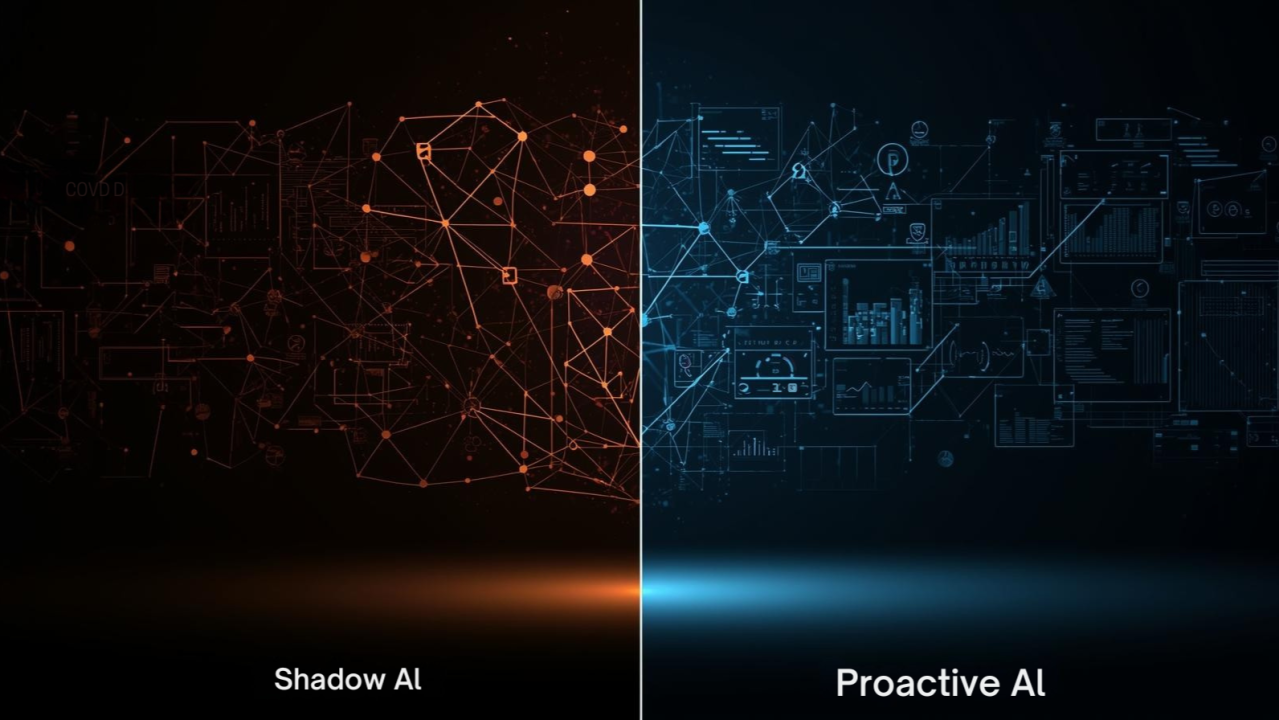
Shadow AI vs. Proactive AI: The Invisible Data Privacy Crisis Hiding in Your Organization
- 2025-10-29
Most of your employees are using unauthorized AI tools right now. Are you the 67% of organizations with zero visibility? Your Organisation The global AI narrative is fractured. On one side, boards celebrate approved innovation. On the other, an unmanaged crisis of Shadow AI, is silently exposing proprietary data and attracting fierce regulatory scrutiny. The…
Introduction In today’s digital economy, cross-border data transfers are a key part of global trade. For Indian businesses, this is a day-to-day operational reality, but it is also a trigger for multifaceted challenges because of the range of disparate and often conflicting data protection laws in different countries. The disequilibrium of legal regulations is not…
The High Court of Bombay in the case of Canon India Pvt. Ltd. v. Union of India, Writ Petition No. 9937 of 2025, decided on 09.09.2025, examined the obligation of Customs authorities to issue reasoned orders on exemption claims even when importers file Bills of Entry “under protest”. The Court held that a reasoned order…